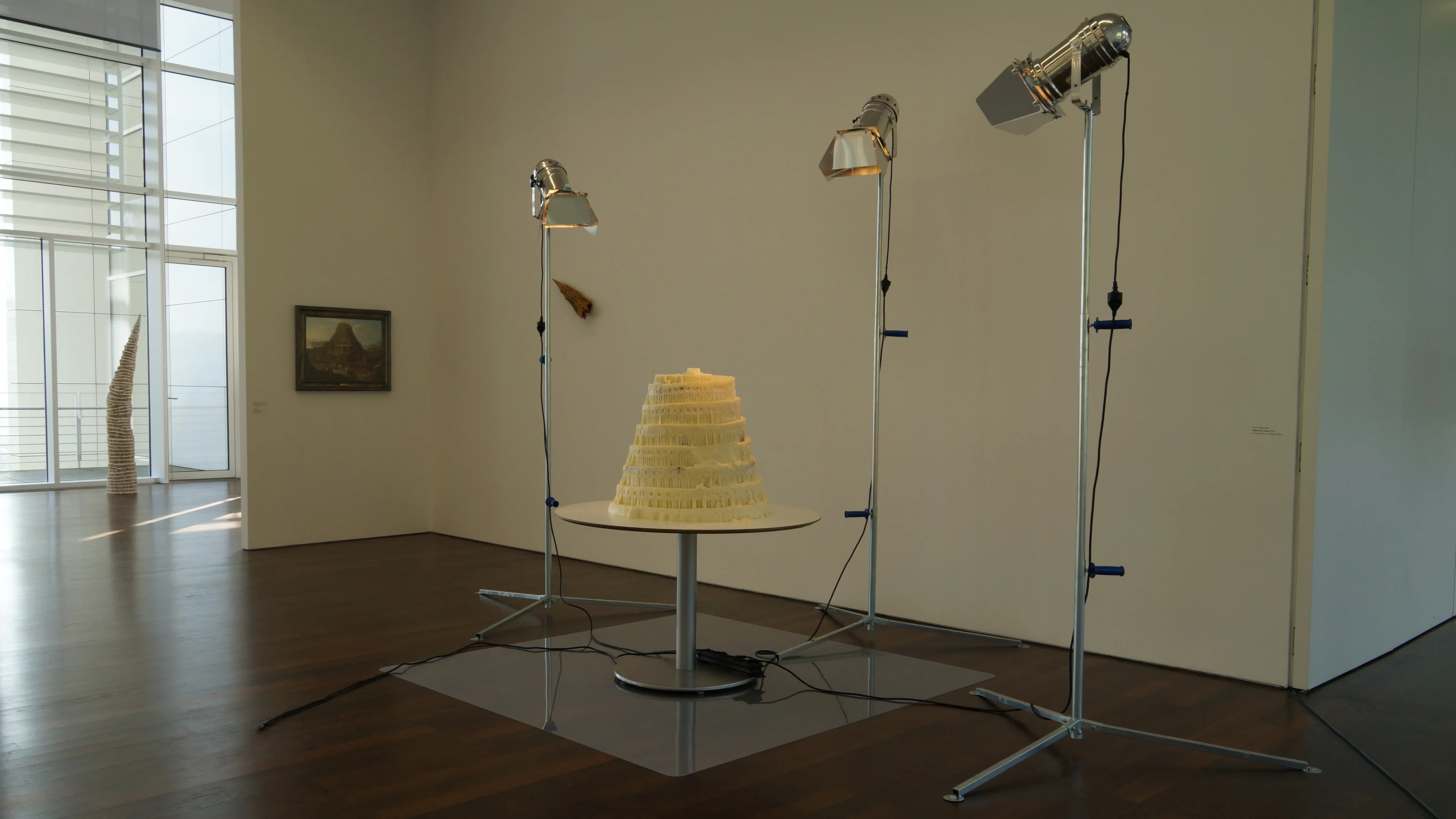
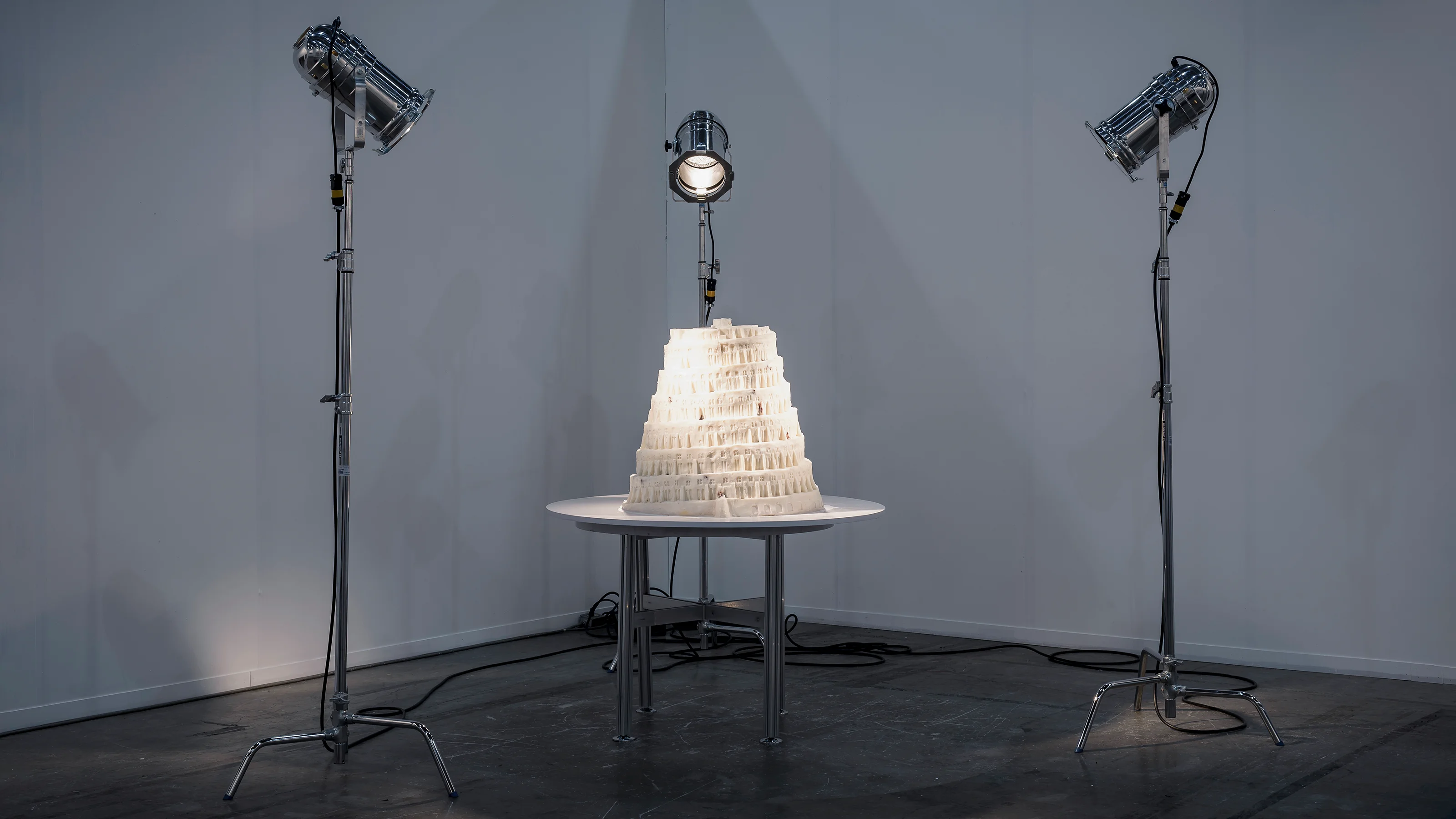
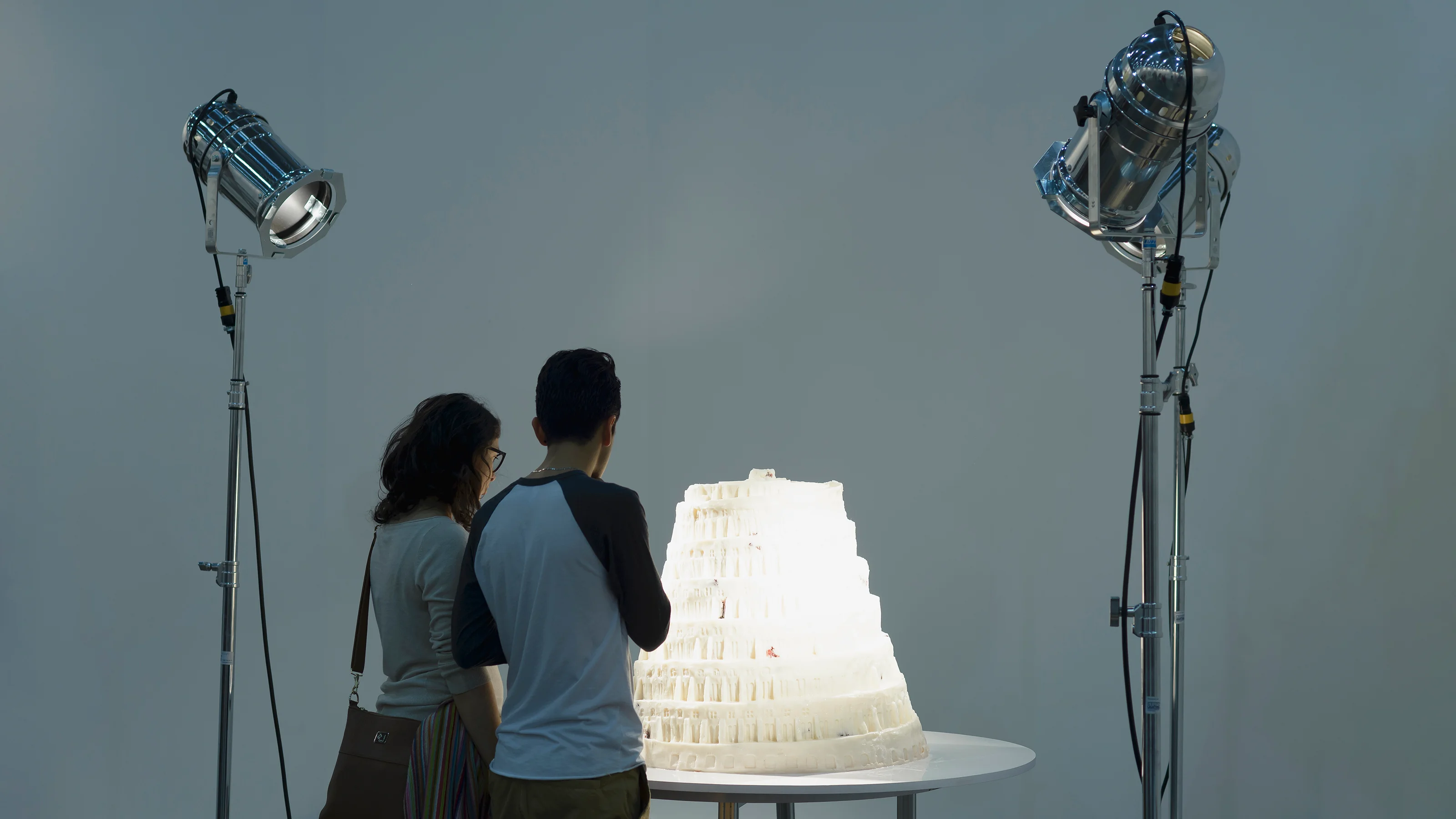
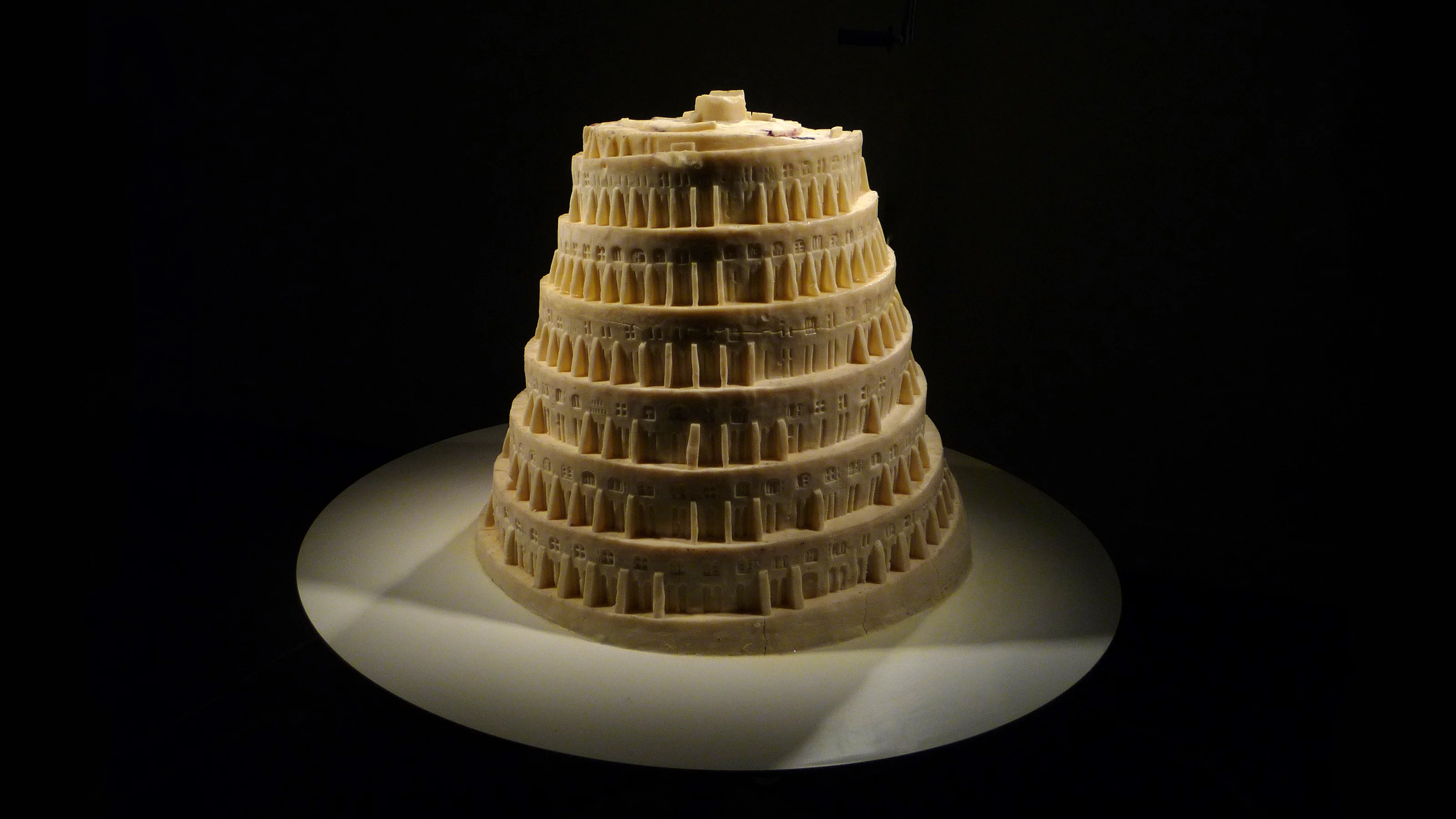
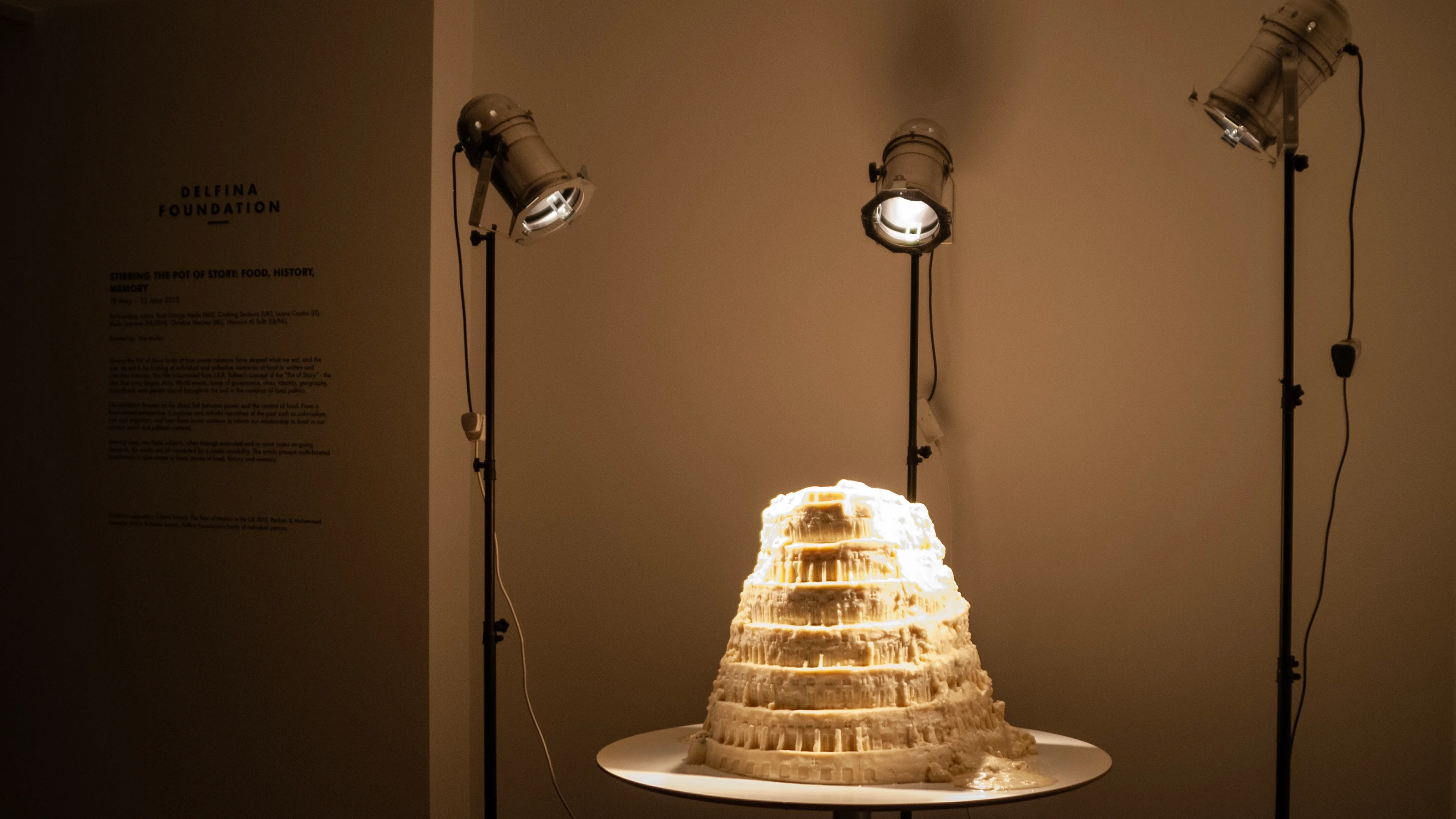
Babel Fat Tower
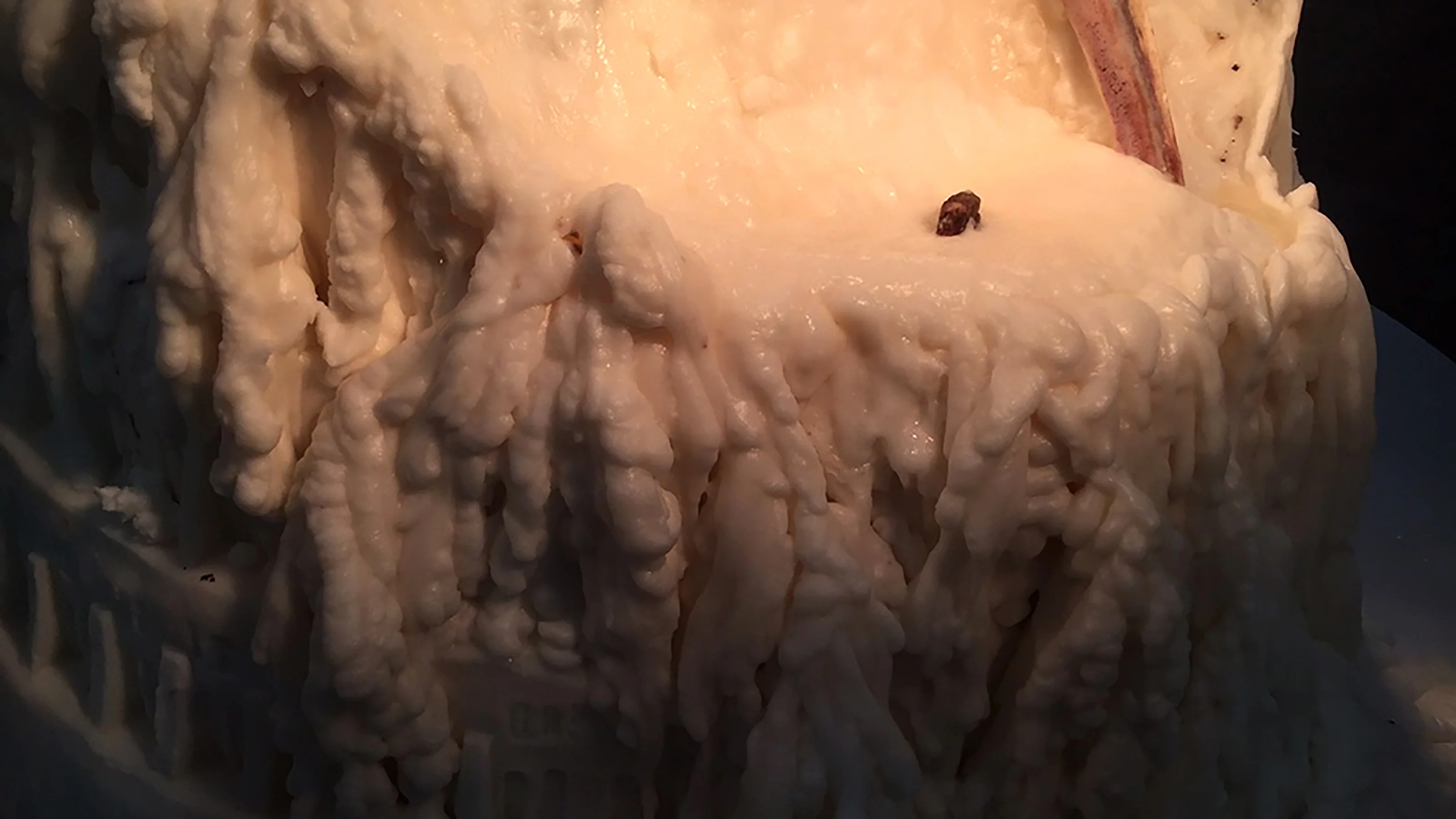
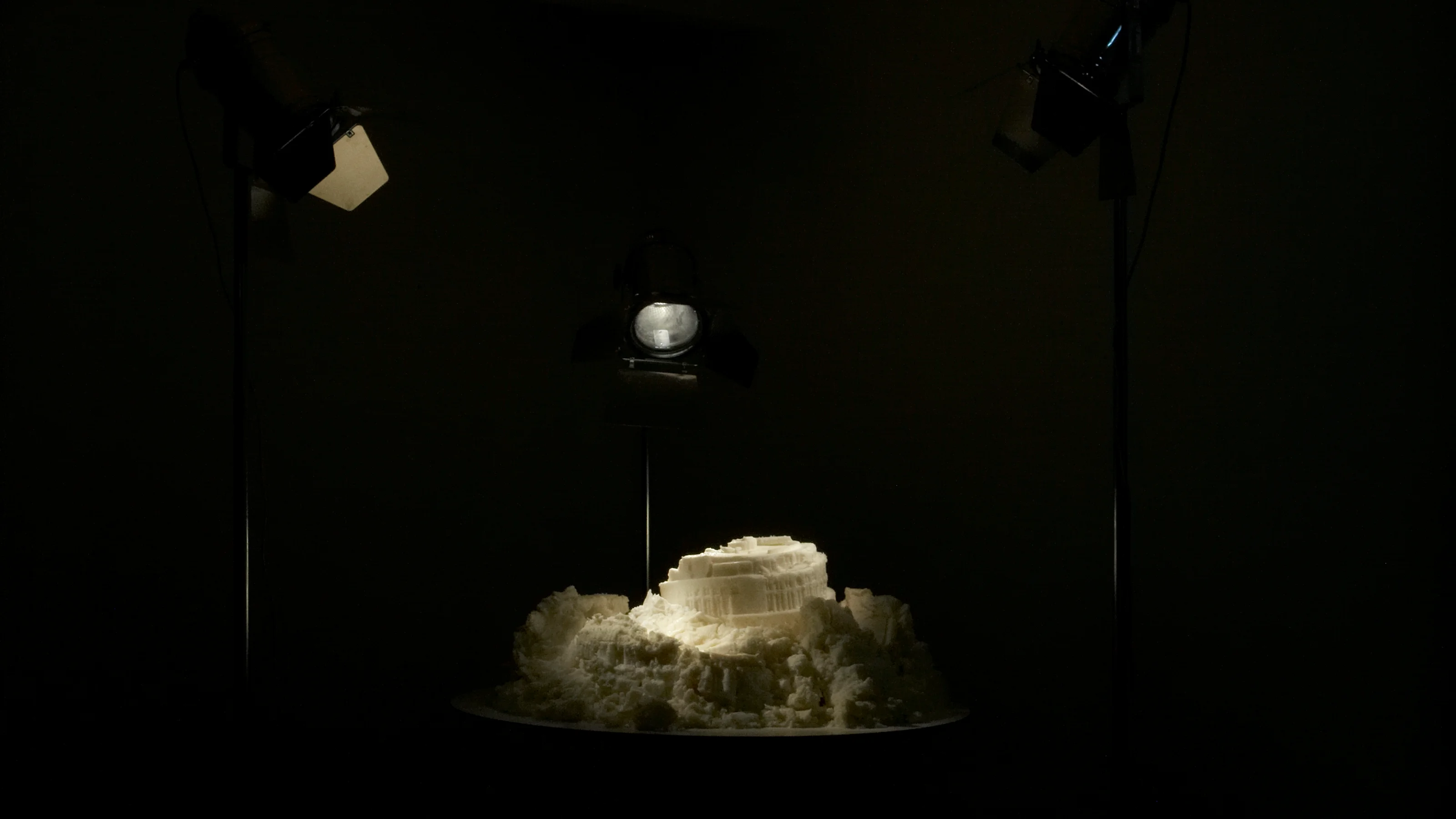
Inspired by the short-lived early–mid 20th-century practice of “White Art,” which, among other materials, used lard to create objects for window displays, this sculpture—made of fat and bones—reinterprets The Tower of Babel by Pieter Brueghel the Elder (1563). Exposed to the heat of theatre lamps, it slowly melts, echoing the Tower’s symbolism of the cycles of human ambition and hubris that with time become frail and inevitably decay. The work has no definitive moment, let alone a fixed conclusion: it is as valid in its pristine form, as in its collapse, and is always in a state of flux.